Autonomous Recording Units Enhance Our Ability to Monitor and Manage Bird Populations
Over the past several years, IBP has become a national leader in the use of Autonomous Recording Units (ARUs) to study wildlife. ARUs utilize microphones and internal software to record sounds such as the vocalizations of birds and other wildlife. The collected audio can later be analyzed to identify species and make inferences about numbers present, the timing of their activity, and even behavior. ARUs can be programmed to record for long periods without human intervention and have several advantages over other types of monitoring techniques:
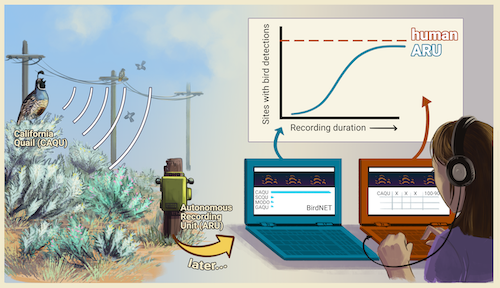
Graphical abstract for Cole et al, 2002. Illustration by Lauren Helton.
- ARUs can be very cost effective, especially when used in remote areas.
- ARUs can sample for hundreds of hours per point. We have found that ARUs will often detect rare (or rarely vocalizing) species that are sometimes missed by a small number of in-person visits.
- To detect owls or other nocturnal species, ARUs can sample at night where access may be difficult or unsafe.
- In combination with automated classifiers, ARU recordings can yield information on daily, seasonal, or yearly patterns of vocalization and inferred presence or absence.
- ARUs create a permanent record of the ambient sounds that can be re-analyzed in future years, for example, to search for additional species or to measure change over time.
In response to the large amount of data generated by ARU deployments, we developed (in partnership with Tungite Labs) a proprietary cloud-based platform, AudioDash, for analyzing, verifying, and storing acoustic data. AudioDash can process large volumes of acoustic data through existing classifiers much more efficiently than individual computers can, addressing a critical bottleneck in acoustic data management. Multiple users can manually validate detections on a browser-based platform, and we have recently added the capacity to train custom classifiers, which improves performance for species of interest.
We work with a variety of public and private agencies studying single species or entire bird communities with ARUs. Here are a few of our recent projects. For more information about IBP's Acoustic Ecology program, please contact
Mary Clapp or
Jerry Cole.
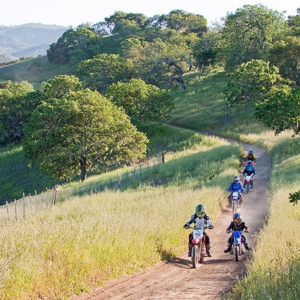
Bird Community Studies at California OHV Parks
Since 2018, we have worked with Off-highway Vehicle (OHV) recreation areas to deploy ARUs that monitor bird communities at varying levels of OHV use. We have developed monitoring protocols specific to each area, so they can deploy ARUs independently and provide audio to IBP for analysis. We have also developed a method for monitoring the use of OHVs themselves, which can be combined with bird monitoring data to examine the effect of vehicle usage on bird occurrence.
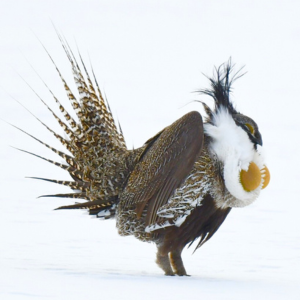
Monitoring Gunnison Sage-Grouse Leks in Colorado
We have worked with the Bureau of Land Management to use ARUs to assess activity and duration and timing of use at Sage-Grouse leks. The relatively small BLM staff cannot easily monitor all the many historic and current leks in the region for this Threatened species and is working with IBP to get information that will enable BLM managers to make informed decisions about multiple-use in these habitats.
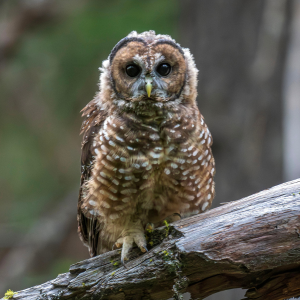
Monitoring Spotted Owls, Barred Owls, and Great Gray Owls
In California, we have incorporated ARU deployments into multiple studies to assess occupancy of Spotted Owls, Barred Owls, and Great Gray Owls at Yosemite National Park, on multiple National Forests, and on BLM lands. We are also developing custom classifiers for these species’ vocalizations, to improve on publicly available acoustic classifiers’ lack of precision in identifying these species and to identify call type to yield inferences about behavior, reproduction, and the age and sex of owls in acoustic recordings.
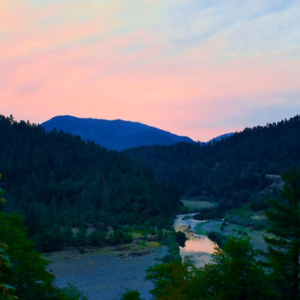
Supporting Indigenous-led Ecosystem Restoration by Integrating Technology and Traditional Ecological Knowledge
We are working with the Karuk Tribe to build local capacity for ARU-based monitoring of culturally important and threatened species, as well as biodiversity at large, on Karuk Aboriginal Territory (KAT) in the Klamath Basin of California. Our shared work involves ongoing restoration monitoring with ARUs, hardware and software development, and youth and Tribal community outreach. We aim to bolster the capacity of the Karuk Tribe to restore wildlife habitat, ecosystem function, and community resilience across KAT.
Developing Local Capacity for ARU Monitoring with the US Forest Service
Driven by a desire to share what we have learned about acoustic data with our partners, we are developing training on ARU workflow for the US Forest Service. Training topics include designing ARU studies, choosing hardware, field implementation, data management, and analysis options.
Photo Credits, Top to Bottom: State of CA, Larry Lamsa, Skyler Bol, Ian Crowther, USFS.